


Keynotes
Keynote #1:
Title: Resilient IoT and Edge Systems for Remote Environments
Abstract: How can IoT systems keep watch when power is limited, connections are unreliable, and maintenance is difficult? In remote areas, these challenges are central to wildfire detection, flood monitoring and early warning. Reliable operation requires careful management of energy, sensing, local processing and communication.
This talk explores how energy harvesting, predictive energy management and lightweight edge intelligence can help meet these needs. It builds on previous work in smart-city applications and explores how to extend it to rural and hard-to-reach environments. Wildfire and flood monitoring illustrate how sensors and gateways could adapt to available energy and connectivity. Topics include local event detection, energy reserves for alerts and operation during network outages.
The keynote outlines the research and testing needed to turn these ideas into reliable early-warning systems.
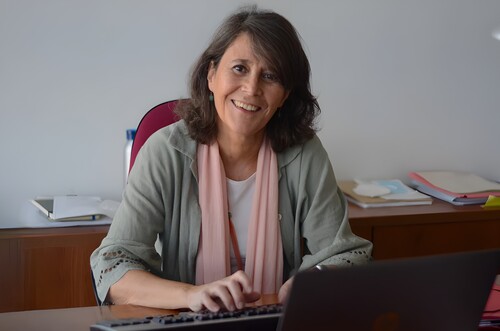
Asunción Santamaría
(Intermodular Digitalization Center (CeDInt) – Universidad Politecnica de Madrid, Spain)
Bio: Asunción Santamaría received her PhD in Telecommunications Engineering from Universidad Politécnica de Madrid (UPM) in 1994. She is currently a Full Professor at UPM’s School of Telecommunications Engineering. She has extensive experience in research and management and has held various management positions at UPM since 1998. She led the creation of CeDInt-UPM, served as its Director from 2005 to 2016, and has since been its Deputy Director for Research.
Her research career began in wireless optical communications and systems. She has participated in R&D projects funded by national agencies and the European Space Agency to develop wireless optical links for intra-satellite communications, in collaboration with INTA, Spain’s National Institute for Aerospace Technology.
In the field of IoT, she led the development of BATNet, a new solution for connecting objects to the Internet using standard protocols (IPv6/6LoWPAN), built entirely on open-source software and open hardware. Her current interests focus on the exploitation and transfer of knowledge generated in these fields to industry, with the aim of ensuring that society benefits from the research advances achieved at CeDInt-UPM.
She has served as a reviewer for scientific journals, an evaluator of R&D projects, and a UPM representative on European platforms. She is a co-founder of Zenitgy, a UPM spin-off.
Keynote #2:
Title: Goal-oriented Semantic Communication
Abstract: This talk presents recent advances in goal-oriented and semantics-aware communications, an emerging paradigm that shifts the focus of wireless networks from reliably delivering bits to delivering information that is most useful for accomplishing a task. As communication systems increasingly support autonomous agents, digital twins, and real-time control applications, classical performance metrics such as throughput, latency, and reliability become necessary but insufficient to capture task effectiveness. The talk is organized into two parts. The first introduces the motivation for semantics-aware and goal-oriented communications and reviews representative frameworks, including the Age of Information (AoI) and Value of Information (VoI). Building on these foundations, we discuss how communication design evolves when the objective is accurate remote tracking, timely decision making, and actuation. The second part presents recent research results demonstrating how semantic and task-aware metrics can guide sampling, scheduling, transmission, and resource allocation decisions to significantly improve system performance. The talk concludes by outlining open research challenges and future directions toward intelligent wireless networks.
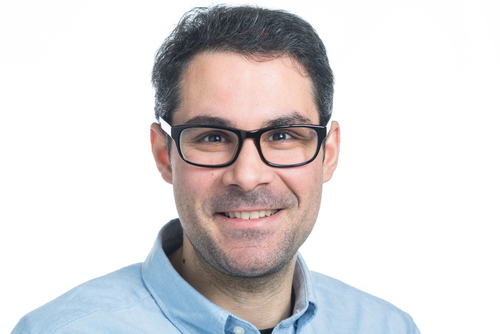
Nikolaos Pappas
(Senior Associate Professor at Linköping University, Sweden)
Bio: NIKOLAOS PAPPAS (Senior Member, IEEE) is currently a Senior Associate Professor with the Department of Computer and Information Science, Linköping University, Linköping, Sweden. His main research interests include the field of wireless communication networks, with an emphasis on semantics-aware goal-oriented communications. He received the Ph.D. degree in computer science from the University of Crete, Greece in 2012. He was a Visiting Scholar with the Institute of Systems Research, University of Maryland, College Park, MD, USA. From 2012 to 2014, he was a Post-Doctoral Researcher with the Department of Telecommunications, CentraleSupelec, France. He has served as the Symposium Co-Chair for the IEEE ICC 2022, IEEE WCNC 2022, IEEE GLOBECOM 2026, and the IEEE PIMRC 2027. He was the General Chair of the 23rd International Symposium on Modeling and Optimization in Mobile, Ad hoc, and Wireless Networks (WiOpt 2025). He is an Area Editor of IEEE OPEN JOURNAL OF THE COMMUNICATIONS SOCIETY and IEEE COMMUNICATIONS LETTERS. He is an Associate Editor for IEEE TRANSACTIONS ON WIRELESS COMMUNICATIONS and IEEE TRANSACTIONS ON MOBILE COMPUTING. He is Section Editor-in-Chief for the Entropy. He has served as guest editor in